
How to Move Manufacturing Production to Canada
Table of Contents
- Why Manufacturers Are Moving Production to Canada
- Manufacturing Site Selection: Choosing Your Location
- Understanding Manufacturing Relocation Costs and Budgeting
- Creating Your Production Transfer Plan
- Manufacturing Relocation Checklist: Critical Steps Before You Move
- Permits, Compliance, and Regulatory Approvals
- Executing Your Move: Timeline and Risk Management
- Frequently Asked Questions
Last Updated: October 5, 2026
Why Manufacturers Are Moving Production to Canada
Moving manufacturing production to a new location is a major strategic decision. Many companies are now looking north for good reasons. Trade uncertainty, rising labor costs, and supply-chain disruptions have pushed manufacturers to reconsider where they produce goods.
The appeal of moving manufacturing production is clear: access to stable trade relationships, skilled workforces, and government incentives. But the process itself is complex and requires careful planning.
The decision to relocate manufacturing isn’t made lightly. Capital investment requirements are significant. Timelines stretch across months or years. Yet the payoff can be substantial. Companies gain proximity to key markets, reduce tariff exposure, and tap into a reliable supply chain.
Several forces are driving this trend. Trade tensions create uncertainty for businesses relying on cross-border production. Manufacturers want to reduce risk. Domestic production capacity appeals to companies seeking supply-chain resilience. Government incentives, from provincial tax breaks to investment credits, make the financial case stronger.
Before committing to relocation, audit your current production costs completely. Include labor, materials, shipping, and overhead. This baseline becomes your benchmark for comparing potential locations.
Manufacturing Site Selection: Choosing Your Location
Choosing the right location is the foundation of a successful move manufacturing production strategy. Location determines your access to talent, proximity to customers, and cost structure for years to come.
Start by identifying what matters most to your operation. Do you need proximity to the U.S. market? Are you seeking lower labor costs? Do you require access to specialized materials or advanced manufacturing capacity? Your answers shape which provinces and cities make sense.
Each region offers distinct advantages. Southern Ontario provides access to major U.S. markets and established supply chains. Quebec offers competitive labor costs and specialized manufacturing expertise. Alberta has lower corporate taxes and energy advantages. British Columbia suits companies targeting Pacific markets. Atlantic provinces provide smaller-scale production with government support for industrial expansion.
Evaluate these factors for each potential site:
- Labor availability and wage rates, Can you find skilled workers at acceptable costs?
- Proximity to suppliers, How close are your material sources and component suppliers?
- Transportation infrastructure, Are highways, ports, and rail connections adequate?
- Utility costs, What are electricity, water, and natural gas prices in the region?
- Real estate and facility costs, What do industrial spaces rent or sell for?
- Government incentives, What tax breaks, grants, or credits does the province offer?
- Regulatory environment, How straightforward is the permitting process?
Visit potential sites in person. Tour industrial parks. Meet with economic development agencies. Talk to other manufacturers already operating there. What looks good on paper sometimes reveals problems during site visits.
The best location balances three things: your operational needs, your budget, and your timeline. Don’t chase the lowest cost if it means sacrificing access to skilled labor or key suppliers.
Understanding Manufacturing Relocation Costs and Budgeting
Relocating manufacturing production involves many cost categories. Understanding them upfront prevents budget surprises and allows realistic financial modeling.
Equipment costs form the largest expense for most relocations. Moving existing machinery, purchasing new equipment to replace what doesn’t transfer, and installing systems in the new facility all add up.
Facility costs include lease or purchase of the new space, renovations, utilities setup, and infrastructure improvements. An older industrial building may need significant upgrades to meet your production standards.
Labor costs for relocation include training new staff, potential overlap periods where you maintain both old and new operations, and management time devoted to the transition. Don’t underestimate this. Transitions are management-intensive.
Regulatory and professional services consume budget too. Legal reviews, environmental assessments, permit applications, and consulting fees mount quickly. Budget for these early.
Consider these cost categories:
- Equipment moving and installation, Transportation, setup, testing
- Facility preparation, Lease deposits, renovations, utilities
- Staffing and training, New hires, training programs, overlap periods
- Permits and approvals, Government fees, consulting services
- Professional services, Legal, accounting, environmental assessment
- Contingency, Always budget 15-20% extra for unexpected costs
- Operational disruption, Lost production during transition, expedited shipping
Create a detailed budget spreadsheet. List every cost category. Get quotes from service providers. Build in contingency. Most relocations cost more than initial estimates because unexpected issues arise.
Financial modeling helps justify the investment. Calculate how long it takes to recover relocation costs through lower operating expenses. Compare scenarios: what if labor costs are 10% higher than projected?
Creating Your Production Transfer Plan
A solid production transfer plan turns relocation from chaos into a managed process. This plan becomes your roadmap for the entire move manufacturing production project.
Start by mapping your current production process end-to-end. Document every step, every machine, every workflow. This baseline helps you replicate operations in the new location and identify what can be improved during the move.
Create a phased transition approach. Most companies don’t move everything at once. A typical approach involves:
- Phase 1: Planning and site preparation, Finalize location, secure facility, begin permitting
- Phase 2: Equipment setup, Move or install machinery, test systems, train initial staff
- Phase 3: Parallel production, Run both facilities simultaneously, validate new processes
- Phase 4: Transition, Gradually shift volume to new facility, resolve issues
- Phase 5: Closure, Wind down old facility, finalize transition
Parallel production is critical. Running both facilities for 2-4 weeks allows you to catch problems before fully committing to the new location. If quality issues emerge or timelines slip, you have a fallback. This costs money but prevents catastrophic failures.
Document standard operating procedures for the new facility. Write down every process, every quality check, every workflow. New staff need clear guidance. Documentation prevents knowledge loss and ensures consistency.
Identify key personnel who will transfer or lead the new operation. These people carry institutional knowledge. They train new hires and troubleshoot problems. Plan for their involvement from the earliest stages.
Create a detailed timeline with milestones:
- Month 1-2: Site selection and lease negotiation
- Month 3-4: Permitting and facility preparation
- Month 5-6: Equipment procurement and logistics
- Month 7-8: Installation and staff hiring
- Month 9-10: Training and parallel production
- Month 11-12: Full transition and closure of old facility
Timelines slip. Build buffer into every milestone. A 12-month plan often takes 15 months in reality.
Manufacturing Relocation Checklist: Critical Steps Before You Move
Before you move manufacturing production, work through this checklist. Each item prevents common mistakes that delay transitions or damage operations.
Pre-Move Verification:
- Finalize site selection and secure facility lease or purchase agreement
- Complete environmental and site assessments
- Confirm utility capacity (electrical, water, natural gas) meets production needs
- Verify zoning permits industrial manufacturing use
- Identify and meet key suppliers in the new region
- Recruit and hire core production staff
- Develop detailed floor plans for equipment layout
- Audit all existing equipment for relocation feasibility
- Create equipment inventory with serial numbers and condition notes
- Obtain insurance quotes for new facility and equipment
- Review and update all product certifications and compliance documentation
Operational Preparation:
- Document all production processes and standard operating procedures
- Develop training materials for new staff
- Identify which equipment transfers and which requires replacement
- Arrange equipment moving and installation logistics
- Establish quality control procedures for the new facility
- Set up supply chain relationships with new vendors
- Create contingency plans for production disruptions
- Brief customers on transition timeline and impact
- Arrange financing or funding for relocation costs
- Schedule facility inspections before move-in
Regulatory and Administrative:
- Confirm business registration and licensing in the new province
- Understand provincial labor laws and employment standards
- Review tax implications of relocation
- Ensure compliance with environmental regulations
- Verify import/export documentation for cross-border shipments
- Update insurance policies for new location
- Notify customers, suppliers, and financial institutions of address change
Use this checklist 2-3 months before your target move date. Assign ownership for each item. Track completion. Incomplete items often signal problems that need solving before relocation.
Permits, Compliance, and Regulatory Approvals
Moving manufacturing production requires navigating multiple regulatory approvals. Each province has different requirements. Understanding them early prevents delays.
Provincial Business Registration is your first step. Register your business in the new province.
Zoning and Land Use Permits confirm the facility is approved for manufacturing. Contact the municipality where your facility is located.
Environmental Assessment may be required depending on your industry and the facility’s history. Manufacturing operations involving chemicals, emissions, or waste typically need environmental review.
Health and Safety Compliance falls under provincial workplace safety regulations. Your facility must meet WorkSafeBC, WorkSafeON, or the equivalent for your province.
Product Certifications may need updating for the new location. If your products require CSA, UL, or other certifications, confirm these remain valid after relocation.
Import/Export Documentation matters if you source materials from the U.S. or ship finished goods across the border.
Labor Compliance requires understanding provincial employment standards. Minimum wage, overtime rules, benefits requirements, and termination procedures vary by province.
Get ahead of regulatory requirements. Contact relevant agencies 3-4 months before your planned move. Ask what permits and approvals you need. Understand timelines.
Missing a single permit can halt production after relocation. One company moved equipment into a facility only to discover zoning prohibited their specific manufacturing process. They had to move again. Verify zoning in writing before committing to a lease.
Executing Your Move: Timeline and Risk Management
The execution phase is where planning meets reality.
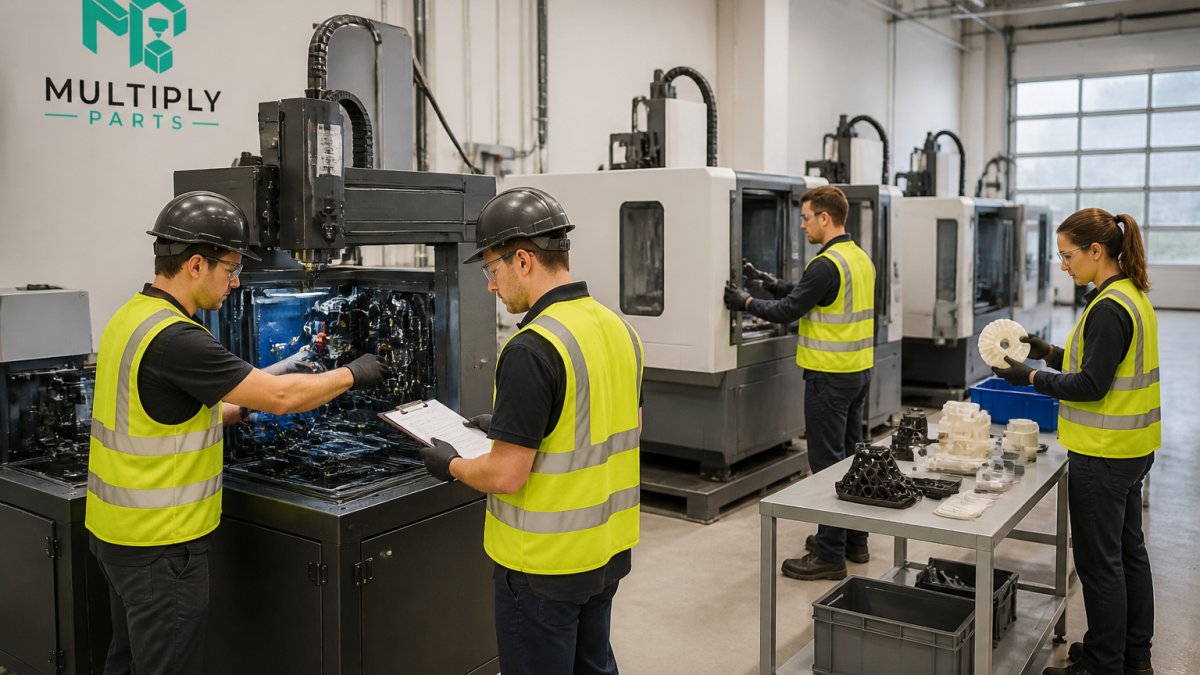
Timeline Management requires discipline. Create a master project timeline with all dependencies mapped. Equipment installation can’t start until the facility is ready.
Assign a project manager responsible for the timeline. This person tracks every milestone, identifies delays early, and escalates issues.
Build buffer into critical paths. If equipment installation typically takes 4 weeks, plan for 6.
Risk Management starts by identifying what could go wrong. Common risks include:
- Equipment arrives damaged or incomplete
- Facility isn’t ready on schedule
- Key staff leave during transition
- Quality problems emerge in new facility
- Suppliers can’t meet demand from new location
- Customers reduce orders during transition uncertainty
- Costs exceed budget
- Regulatory approvals are delayed
For each risk, develop a mitigation plan. If equipment damage is a concern, get comprehensive insurance and inspect shipments immediately upon arrival.
Parallel production is your biggest risk mitigation tool. Running both facilities for 4-6 weeks catches problems before full commitment. Yes, it costs money.
Communication reduces risk and keeps stakeholders aligned. Brief customers on the transition timeline before it happens.
Keep employees informed. Uncertainty breeds anxiety and turnover.
MultiplyParts can support companies navigating these transitions. Our manufacturing expertise helps identify risks early and develop practical solutions.
Track actual performance against plan. Weekly reports comparing actual progress to planned milestones reveal problems fast. If you’re behind, adjust. Add resources.
MultiplyParts can support your relocation strategy.
Frequently Asked Questions
What are the main costs involved when moving manufacturing production to Canada?
Manufacturing relocation costs typically include facility lease or purchase, equipment transport and installation, workforce recruitment and training, permits and regulatory compliance, and operational setup. Costs vary significantly based on facility size, equipment complexity, location choice, and whether you’re relocating existing machinery or purchasing new. Consult with relocation specialists and contact your provincial economic development office for incentive programs that can offset expenses. MultiplyParts can help with production ramp-up without capital-intensive tooling investments.
How long does it take to move production to Canada?
A typical production transfer timeline spans 6-18 months, depending on facility complexity and regulatory requirements. Initial planning and site selection take 2-3 months, permits and approvals 2-4 months, equipment setup and workforce training 2-3 months, and pilot production 1-2 months. Parallel workflows can compress timelines. Start your manufacturing relocation checklist early and engage provincial regulators immediately to identify potential delays. Fast-track production with 3D printing services while permanent facilities come online.
What permits and regulations do I need for a manufacturing facility in Canada?
Manufacturers must comply with federal and provincial environmental regulations, workplace safety standards (Provincial Occupational Health and Safety Acts), building codes, zoning bylaws, and industry-specific certifications. You’ll need business licensing, environmental assessments, and potentially air/water discharge permits depending on your process. Provincial ministries of labour and environment oversee compliance. Consult your provincial economic development authority and local municipality early, they provide guidance and can streamline approvals. Regulatory requirements vary by province, so confirm specifics for your chosen location.
How do I choose the right location for my manufacturing facility?
Manufacturing site selection depends on proximity to suppliers and customers, labor availability and wage rates, utility costs and infrastructure quality, provincial tax incentives, and real estate costs. Evaluate each province’s industrial policies, workforce skills, and transportation networks. Create a scoring matrix comparing candidate sites across these criteria. Engage provincial economic development agencies, they provide free site selection support and incentive information. Consider proximity to major markets and supply-chain partners. Visit potential facilities and speak with existing manufacturers in the region about their experience.
